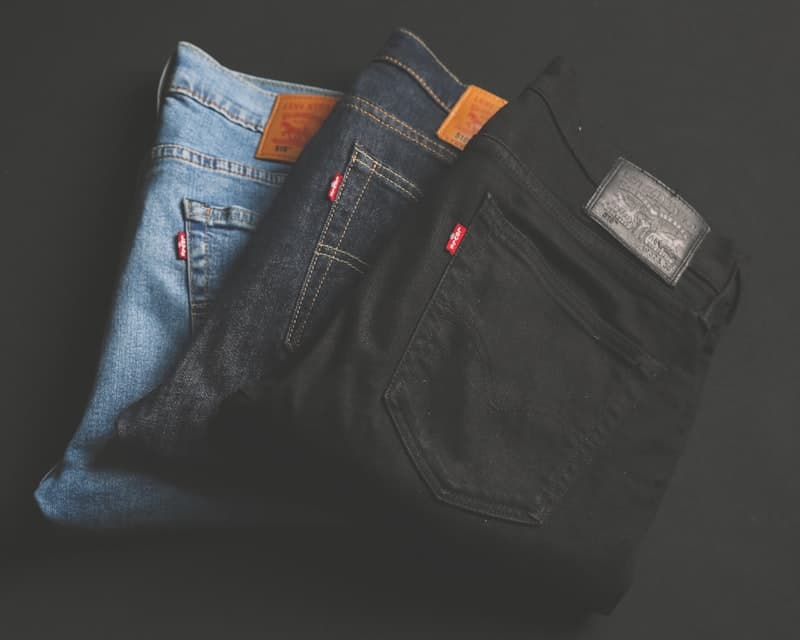
Everything About LVC (Levi's Vintage Clothing) — Wearing the Denim Archive
You're not just wearing jeans — you're wearing history. A complete guide to Levi's Vintage Clothing: the 501XX lineage, three iconic jacket types, selvedge denim, and a first-purchase guide.
When I first heard about LVC, my honest reaction was: "It's just expensive jeans." Same logo, same look — why would it cost three or four times more than regular Levi's?
But the more I dug into it, the more I realized this isn't a premium tier of the same thing. It's an entirely different philosophy.
"You're not just wearing jeans — you're wearing history."
That's the one-sentence reason LVC exists.
What Is LVC?
Levi's Vintage Clothing is Levi's premium reproduction line, where every detail of a specific year's product is faithfully recreated based on the company's own archive. It's a completely separate category from regular Levi's — selvedge denim, unsanforized fabric, Japanese Kaihara weave, Big E red tab — all aimed at the most accurate reproduction of the original.
Every LVC garment has a specific year on its tag. If it says "1947 501XX," that means every detail of the 501 produced in 1947 has been reproduced: the button stamp, the stitch direction, the fabric weight, the leather patch shape — all analyzed from archive originals.
How LVC Was Born — A Story That Started in Japan
LVC's origin is tied to the Ame-Kaji (American Casual) boom in 1980s Japan. Japanese buyers scoured vintage shops across America, bringing back 1940s–60s Levi's 501s to resell in Tokyo — where a good condition 1950s 501XX could fetch hundreds of thousands of yen.
Levi's took notice. In 1987, Levi's Japan began producing small runs of reproduction models. The response was overwhelming, and in 1996, LVC launched as an official line.
The one thing that separates LVC from every other reproduction brand: it owns the original archives. Levi's San Francisco headquarters holds physical archives dating back to the 1870s, and the LVC development team analyzes them directly. No third-party reproduction brand can touch that.
The 501XX Lineage — From the 19th Century to 1955
The 501 is the core of LVC. Here's how it evolved over the decades.
🏛️ 19th Century (1873–1890s) — The Original
In 1873, Levi Strauss and tailor Jacob Davis patented riveted denim work pants. The birth of jeans.
Key features:
- Single back pocket (right side only)
- No arcuate stitching — uniform mass production wasn't possible yet
- Cinch back — a metal adjuster for the waist (no belts yet)
- 6 suspender buttons
- 13oz+ heavy selvedge denim
🔧 1922 — The Belt Loop Arrives
Military culture brought belts into everyday wear. In 1922, Levi's added belt loops for the first time — but kept the suspender buttons too, for those who preferred the old way. A fascinating transitional model: belt loops and suspender buttons coexist.
⚔️ 1944 — The Wartime 501
WWII rationing changed everything:
- Arcuate embroidery → replaced with paint (the most iconic change)
- Watch pocket rivets removed
Paradoxically, this "war model" is considered extremely rare and valuable among collectors.
🌟 1947 — LVC's Most Popular Model
With rationing lifted after the war, the 501 was restored — and then some. The 1947 is the best-selling model in the entire LVC line, widely regarded as the definitive 501.
- Watch pocket rivets restored
- Cinch back and suspender buttons permanently removed
- Double needle technology introduced — uniform arcuate stitching at scale
- Current LVC 1947: 12oz red line selvedge denim, Kaihara weave, organic cotton
🎸 1955 — The Icon of Youth
The year rock 'n' roll was born. James Dean wore a 501 on screen, and jeans crossed over from workwear to symbol of youth and rebellion.
- "LEVI'S" printed on both sides of the red tab (previously one side only)
- Big E (uppercase E) red tab
- Closest to the modern 501's appearance
501XX Timeline
1873  ─── Patent filed, jeans born (single back pocket, cinch back)
1922  ─── Belt loops added (coexist with suspender buttons)
1933  ─── Both back pockets complete, handmade arcuate
1936  ─── Big E red tab introduced
1944  ─── Wartime simplifications (painted arcuate)
1947  ─── Postwar restoration + double needle arcuate ★ Most popular LVC
1955  ─── Double-sided red tab, blueprint for modern 501
Three Denim Jacket Types — Type I, II, III
Alongside the 501, LVC's denim jackets are its other defining pillar.
Type I — 506XX (1905–)
Levi's first denim jacket. The uniform of miners, cowboys, and railroad workers.
- Cinch back
- Pocket flap (covered front pockets)
- Big E red tab
- The most vintage-feeling of the three
Type II — 507XX (1953–)
The best-selling jacket in LVC's lineup. My personal favorite.
- Double pleated front — not found in Type I
- No cinch back; side button adjuster instead
- "Two horses" leather patch (Lot 507)
- Big E red tab
- Discontinued in the early 1960s, revived through LVC
Type III — 557XX / Trucker (1961–)
The "trucker jacket" most people picture when they think Levi's. The most wearable today.
- Two chest pockets
- Clean, streamlined silhouette
- Easiest to style with modern clothes
| Type I | Type II | Type III | |
|---|---|---|---|
| Cinch back | ✅ | ❌ | ❌ |
| Front pleats | ❌ | ✅ | ❌ |
| Pocket layout | Side pockets | Side pockets | 2 chest pockets |
| Feel | Most vintage | Middle ground | Most modern |
The Fabric — Selvedge Denim and Kaihara
What Is Selvedge Denim?
Selvedge comes from "self-edge" — denim woven on a narrow shuttle loom. The edges finish naturally and don't fray. It takes far longer to weave than regular denim and yields less fabric per run, but the tightly woven structure produces a distinctive fading character over time.
On LVC garments, you can see the selvedge by turning the inseam outward. On the 1947, look for the signature 12oz red line selvedge.
Kaihara
LVC's fabric partner is Kaihara Co., Ltd., a weaving company founded in 1893 in Hiroshima Prefecture, Japan. Kaihara can reproduce the denim character of 1940s–50s American Cone Mills more accurately than anyone else in the world — making LVC's selvedge denim, in some ways, more precise than the originals.
What Is Unsanforized?
Most LVC models use Shrink-to-Fit™ fabric — meaning the denim hasn't been pre-shrunk. It will shrink approximately 10% on first wash. This surprises a lot of first-time buyers: raw LVC feels noticeably large at first. That's intentional — you need to size up.
First Purchase Guide
Sizing
LVC sizes are based on post-wash measurements. When buying raw:
- Waist: 1–1.5 inches larger than your usual size
- Length: 2–3 inches longer
If you normally wear 32W×32L, consider 33W×34L or 34W×34L in LVC raw.
First Wash
Cold Soak (most common):
- Fill a bathtub with cold water
- Turn jeans inside out, submerge for 20–30 minutes
- Remove, shape, and hang dry in the shade
Hot Soak: For maximum shrinkage. More dramatic results.
Which Model to Start With?
| Goal | Recommended Model |
|---|---|
| First LVC, familiar fit | 1955 501 — closest to modern 501 |
| Classic vintage fit | 1947 501XX — the LVC icon |
| Best jacket | 1953 Type II — best-seller |
| Collector's piece | 1922 or 1933 501XX |
Price Reference
| Category | Price Range |
|---|---|
| 501 jeans (1947, 1955, etc.) | $250–300 |
| Type I, II, III jackets | $350–420 |
| Western shirts | $180–230 |
| 19th Century Sack Coat | $520–620 |
Why LVC Is Different
There are plenty of vintage-inspired denim brands out there — Full Count, The Strike Gold, RRL. What makes LVC stand apart?
It's the only brand that works from the original archive. Every other reproduction brand references secondhand market finds or historical documents — they're educated guesses. LVC looks at the actual originals. The font on the button stamp, the thickness of the leather patch, the color of the stitching thread — nobody else can match that.
And then there's the fading. LVC raw denim develops a fade pattern that's entirely your own. The highlights at the knees, the whiskers on the thighs, the coin fade on the back pocket — all shaped by how you actually live in them. No other pair of jeans can replicate that.
It starts stiff and rough. But months, years later, you end up with a pair of jeans that can't be replaced by anything else in the world.
Buying LVC isn't buying jeans. It's buying the energy of postwar 1947 reconstruction, the rebellion of rock 'n' roll 1955. That's why LVC has held its position at the top of the premium denim market for over 30 years.
Prices and availability vary by region and season. Check current listings before purchasing.
Get new posts by email ✉️
We'll notify you when new posts are published