It Wasn't Weapons That Won the War, It Was Logistics -- 85th Anniversary of the Lend-Lease Act
On March 11, 1941, President Roosevelt signed the Lend-Lease Act, a decisive bill that changed the course of World War II. A look back at America's strategy of saving the Allies without firing a single shot.
A Single Bill Changed the War
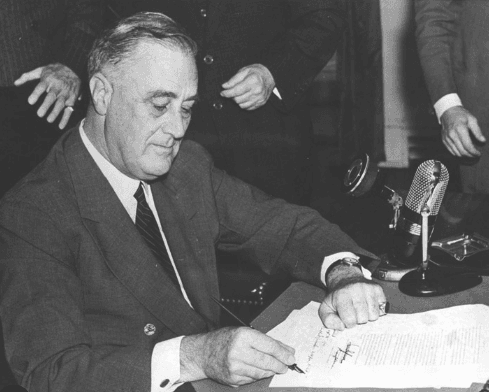
On March 11, 1941, at the White House in Washington, D.C., President Franklin D. Roosevelt put pen to paper. The bill he signed was the Lend-Lease Act, officially titled "An Act to Promote the Defense of the United States." It was the moment when America, without firing a single shot, changed the course of World War II.
Eighty-five years later, we look back at how this bill turned history on its head.
Fighting a War with Wallets, Not Guns

In 1940, Europe was crumbling one nation at a time under Nazi Germany's boot. France had fallen, Britain stood alone with Churchill declaring "we shall fight on the beaches." The problem was money. Britain's war funds were running out, and under American neutrality laws, the U.S. could not sell weapons to belligerent nations.
Roosevelt found an ingenious way around this barrier. "When your neighbor's house is on fire, what's wrong with lending them your garden hose?" -- his famous press conference remark. The key word was lending, not selling.
The Lend-Lease Act by the Numbers
Under the Lend-Lease Act, the total supplies America provided to Allied nations by war's end amounted to $50 billion (roughly $900 billion in 2026 dollars).
- Britain: Received about 60% of the total -- tanks, fighter planes, food, fuel, and more
- Soviet Union: Received about 22% -- 400,000 jeeps, 2,000 locomotives, 4 million tons of canned food
- China: Military supplies to both Nationalist and Communist forces
- Free France: Support for de Gaulle's Resistance
In the case of the Soviet Union, Stalin later acknowledged: "Without American aid, we would not have won the war." It was the most powerful "logistics war" in history.
America's Great Pivot from Isolationism
The Lend-Lease Act was more than simple military aid; it was a turning point that fundamentally transformed American foreign policy philosophy. Throughout the 1930s, isolationism dominated in America -- a refusal to get involved in European wars. The trauma of World War I ran deep, and both Congress and public opinion asked, "Why should American boys die for Europe's problems?"
Roosevelt broke through this barrier with his "lending the hose" analogy. His logic -- that America could intervene in the war without directly picking up a gun -- persuaded Congress. Until America entered the war fully after the Pearl Harbor attack in December 1941, the Lend-Lease Act bought the Allies time to hold on.
This History on Screen
While few films directly address the Lend-Lease Act, several works depict the era that gave rise to it.
Darkest Hour (2017) is set in 1940, as Churchill became Prime Minister and decided on the Dunkirk evacuation. Gary Oldman's commanding performance shines, and the film vividly shows just how desperate Britain was in the period just before the Lend-Lease Act was passed.
Band of Brothers (2001), produced by Spielberg and Hanks, is a masterpiece of war drama. It follows the American front lines from Normandy onward, with troops using equipment and supplies delivered under the Lend-Lease Act. The realism of war is palpable throughout all 10 episodes.
The Question History Left Behind
The Lend-Lease Act still resonates today. In 2022, the United States passed a support bill for Ukraine, invoking this law's name once more: the "Ukraine Democracy Defense Lend-Lease Act." History repeats itself.
When Roosevelt put his pen to that signature line in 1941, he was answering for himself what role America should play in the world. Whether that answer was right is still debated today, but there is no question that the decision changed the world.
Get new posts by email ✉️
We'll notify you when new posts are published