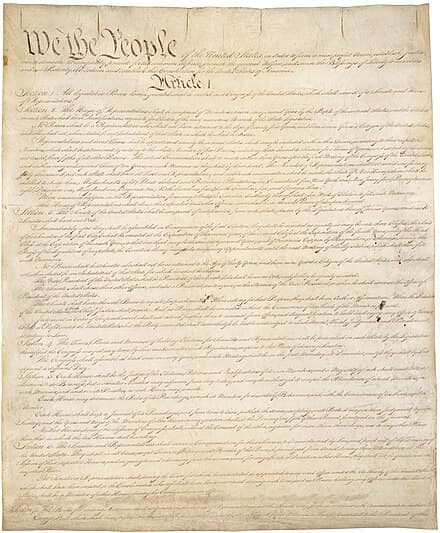
Why 'Amendments'? The Reason America Never Rewrites Its Constitution
The U.S. Constitution hasn't had a single word changed in 237 years. Instead, America sticks Post-it notes on the back. Here's the surprisingly clever reason behind the Amendment system — and how it compares to countries that rewrite their constitutions from scratch.
The Country That Never "Fixes" Its Constitution
Most countries rewrite their constitution when it needs changing. South Korea, for instance, has done nine complete constitutional overhauls since 1948 — each one creating a new "Republic."
America is different. The original text written in 1787 has not been altered by a single character in 237 years. When they abolished slavery, gave women the right to vote, enacted Prohibition, then repealed it — the original text stayed untouched. New provisions were simply appended to the end.
That's what an Amendment is.
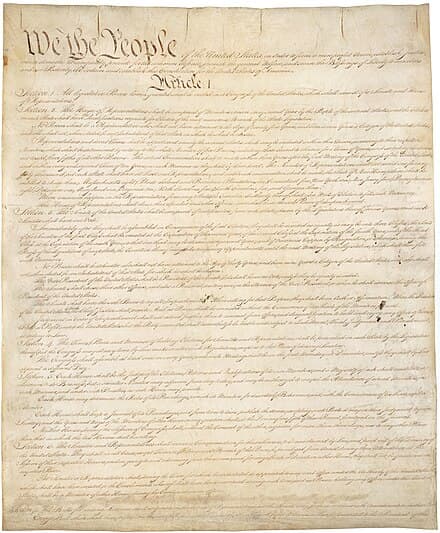
The Birth of the Post-it Note System
Why this approach? Let's go back to the Constitutional Convention of 1787 in Philadelphia.
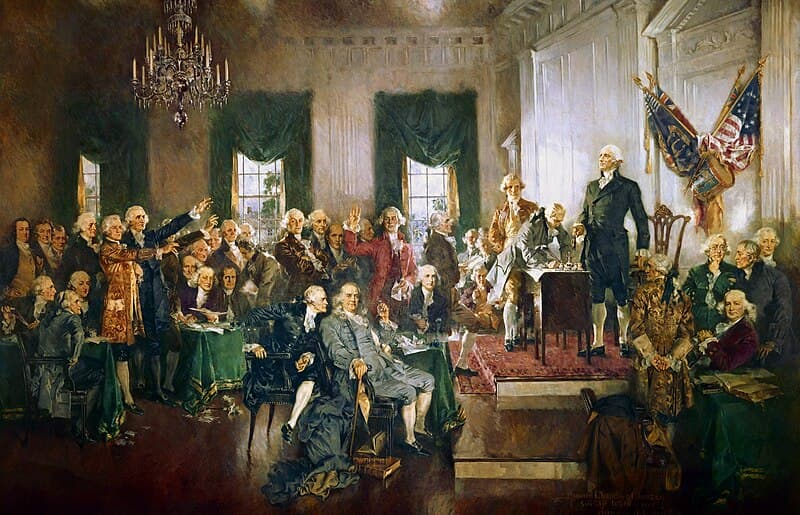
After fierce debate, the Founding Fathers completed the original seven Articles of the Constitution. But during ratification, opponents revolted:
"There's no guarantee of individual rights! What if the government decides to suppress religion or censor the press?"
They had a point. These were people who had lived under British monarchy — religious persecution, press censorship, and arbitrary arrests were fresh memories. So James Madison made a promise:
"Ratify the Constitution, and I'll immediately add provisions guaranteeing individual rights."
Here came the pivotal decision. Madison initially planned to insert changes directly into the original text, but Representative Roger Sherman objected:
"The original was created by 'the will of the people.' If we alter it later, no one will know what was originally agreed upon. Let's append changes separately."
And so America's unique system was born: preserve the original, add changes at the end.
237 Years, Only 27 Post-it Notes
The results of this system are remarkable:
Original Constitution (1788) — 7 Articles
    ↓ Appended
Amendments 1-10 (1791) — Bill of Rights
Amendment 11 (1795)
Amendment 12 (1804)
    ...
Amendment 18 (1919) — Prohibition enacted
Amendment 21 (1933) — Prohibition repealed (the only amendment to cancel another!)
    ...
Amendment 27 (1992) — Most recent (congressional pay limits)
Only 27 additions in 237 years. Why so few? The requirements are brutally difficult:
- Two-thirds majority in both the Senate and House (or two-thirds of states request a constitutional convention)
- Three-quarters of all 50 states (38 states) must ratify
Over 11,000 amendment proposals have been submitted to Congress. Only 27 passed. That's a success rate of about 0.25% — the eye of a needle.
Two Philosophies of Constitutional Change
| South Korea | United States | |
|---|---|---|
| Method | Full rewrite of original text | Preserve original + append |
| Frequency | 9 overhauls (1948–1987) | 27 amendments (1791–1992) |
| Analogy | Reinstall the operating system | Keep applying patches |
| Strength | Complete redesign for the times | Perfect preservation of change history |
| Weakness | Previous constitutional context is lost | Old provisions can become outdated |
Put simply, some countries do a fresh OS install, while America keeps patching.
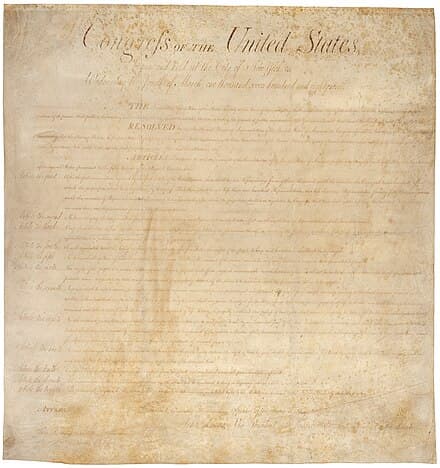
Fun Amendment Stories
The longest wait: The 27th Amendment was proposed by Madison in 1789 but wasn't ratified until 203 years later in 1992. In 1982, University of Texas student Gregory Watson wrote a paper arguing the amendment was still viable — his professor gave him a C. Furious, Watson personally wrote to state legislatures launching a ratification campaign. Ten years later, he succeeded. The professor later changed his grade to an A.
The self-canceling amendment: The 18th Amendment (Prohibition, 1919) was repealed by the 21st Amendment (1933). It's the only time in American history that one amendment has canceled another. They banned alcohol, realized "this was a mistake," and brought it back.
The famous failure: The Equal Rights Amendment (ERA) passed Congress in 1972 but fell three states short of ratification. The debate continues over 50 years later.
🎬 Experience This History
The musical Hamilton (2020, Disney+) turns the political battles of the early constitutional era into hip-hop theater. The scenes where Hamilton and Madison clash over the Bill of Rights are the best introduction to understanding why amendments exist.
A More Perfect Union (1989) recreates the 1787 Philadelphia Convention, vividly showing why the Founders designed this system the way they did.
A Living Document
Americans call their Constitution a "Living Document." Written 237 years ago, it has evolved with the times thanks to the amendment system — those Post-it notes stuck to the back.
Abolishing slavery, granting women the vote, enacting Prohibition then admitting it failed — every one of these was a single Post-it note added to history.
Never altering the original means mistakes stay on the record too. And perhaps that's the most honest form a constitution can take.
Image credits: Wikimedia Commons / Library of Congress / National Archives / U.S. Capitol (all public domain)
Get new posts by email ✉️
We'll notify you when new posts are published