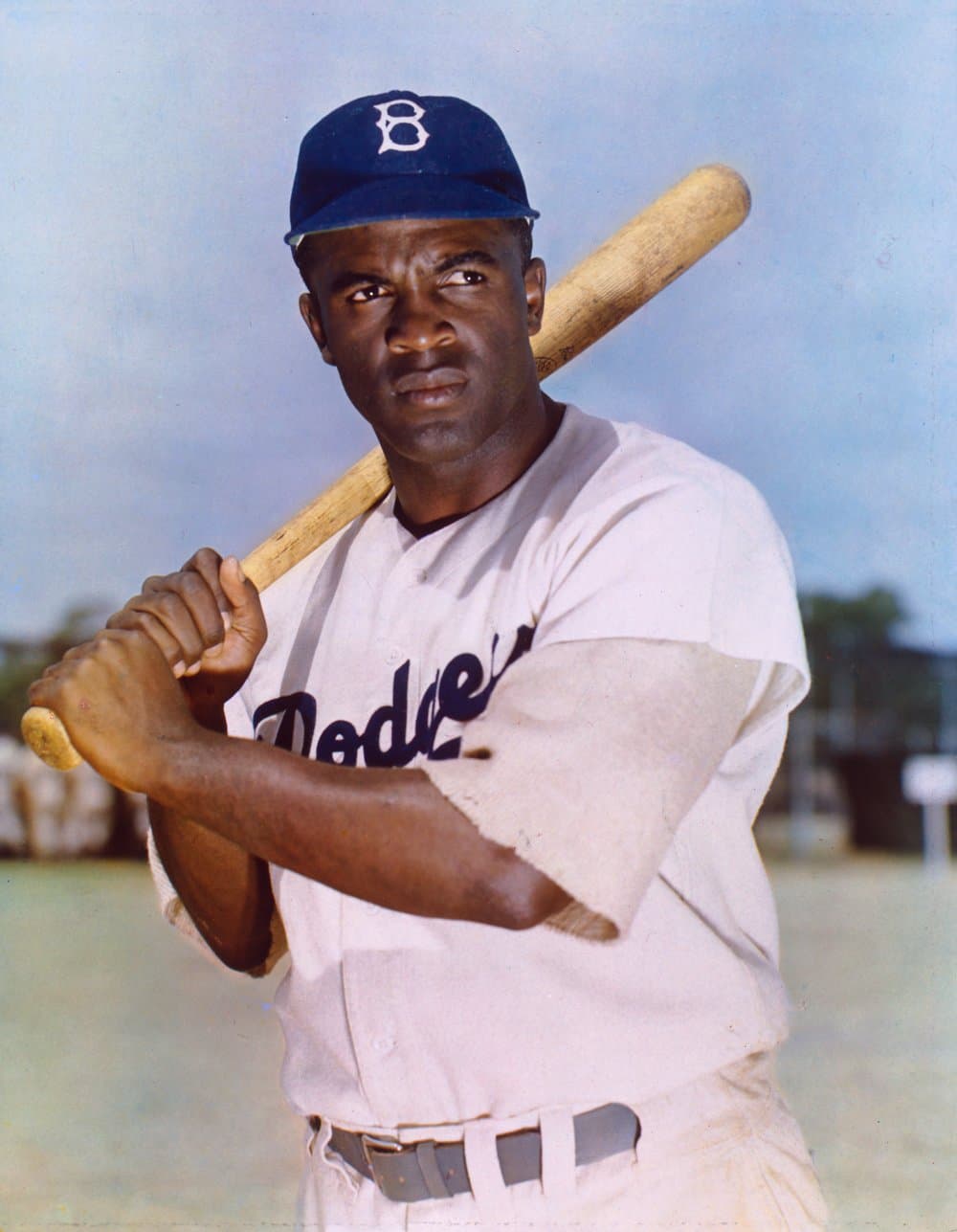
Number 42 — Jackie Robinson, the Man Who Changed Baseball by Refusing to Fight Back
Every April 15, every Major League Baseball player wears the same number: 42. It belongs to Jackie Robinson, who broke MLB's color barrier on April 15, 1947. Amid death threats, teammates' rejection, and deliberate violence, he kept one promise — never fight back.
Why Every Player Wears 42 on April 15
Every April 15, something remarkable happens across Major League Baseball. Every player on every team — home and away, pitcher and catcher — wears the same number on their back: 42.
It is the only number ever retired across all MLB teams simultaneously. It belonged to Jackie Robinson. Once you know his story, you understand why no one will ever wear it again.
Georgia Poverty, California Dreams
Jackie Roosevelt Robinson was born on January 31, 1919, in Cairo, Georgia — the youngest of five children born to sharecroppers. His father abandoned the family when Jackie was six months old. His mother, Mallie Robinson, packed up her children and moved to Pasadena, California.
Being a Black family in a white neighborhood was a daily struggle. Neighbors pressured them to sell and leave. The children were bullied at school. But Mallie held firm, and her children thrived.
At UCLA, Jackie became the first athlete in the university's history to letter in four sports — baseball, basketball, football, and track. He wasn't just a baseball player. He was a born athlete.
The Army — Refusing the Back of the Bus
During World War II, Robinson was drafted into the U.S. Army. In 1944, he refused an order to move to the back of a military bus. Despite segregation being enforced even within the armed forces, Robinson would not move.
He was court-martialed — and acquitted. This was eleven years before Rosa Parks made her famous stand on a Montgomery bus.
Branch Rickey's Question
In 1945, Brooklyn Dodgers general manager Branch Rickey decided to break baseball's color line. He searched the country for "a player who could take it" — and summoned Jackie Robinson to his office.
Rickey role-played every scenario Robinson would face: fans spitting on him, players spiking his ankles, hotels refusing him a room.
Then he asked the essential question:
"I need a player with the guts NOT to fight back. Can you do it?"
Robinson asked: "You want a player who doesn't have the courage to fight back?"
Rickey replied: "I want a player who has the courage NOT to fight back."
Robinson agreed. And he kept that promise.
April 15, 1947 — Ebbets Field
Ebbets Field, Brooklyn. Jackie Robinson's name appeared in the Dodgers' starting lineup at first base. Number 42.
He went 0-for-3 that day. But stepping onto that field was the point. He was the first Black player in Major League Baseball in 63 years. In an America where Black people couldn't share water fountains or restrooms with white people, he stepped onto the same diamond.
What He Endured
The abuse Robinson faced defies imagination.
- His own teammates circulated a petition refusing to play alongside a Black man. Rickey told them: leave if you want.
- Death threats arrived throughout the season. The FBI investigated.
- Opposing managers and players hurled racial slurs openly. Philadelphia Phillies manager Ben Chapman's dugout tirades became national news.
- Hotels and restaurants refused Robinson service during away games.
Robinson never retaliated. He answered with his bat.
Pee Wee Reese's Shoulder
May 1947, Cincinnati. Jeers and slurs rained down from the stands. Dodgers shortstop Pee Wee Reese — a white Southerner from Kentucky — walked away from his position and crossed the infield to where Robinson stood at first base.
In full view of the hostile crowd, Reese put his arm around Robinson's shoulder. No words.
"You're my teammate."
That single gesture became one of the most iconic moments in baseball history.
The Numbers Speak
Robinson was no mere symbol. He was a dominant player.
- 1947 — National League Rookie of the Year
- 1949 — National League MVP, .342 batting average (league-best)
- 6× All-Star
- 1955 — Brooklyn Dodgers' first World Series championship
- Career average: .311, 197 stolen bases
For ten years, he didn't fight on the field. He proved himself on it.
42, Forever
After retiring in 1956, Robinson became an active voice in the civil rights movement. He marched alongside Dr. Martin Luther King Jr. and served on the board of the NAACP.
Jackie Robinson died on October 24, 1972, at the age of 53, from complications of diabetes.
In 1997, Major League Baseball retired number 42 across every team — the only number in MLB history to receive this honor. Every April 15, every player wears 42 in his memory.
The Courage Not to Fight Back
Robinson didn't stay silent because he was weak. This was a man who had refused to move to the back of an Army bus. But he understood that the moment he swung back, the narrative would become "See — that's why they can't play." So he swallowed his fury for a cause larger than himself.
Branch Rickey asked for a player with the courage not to fight back. Jackie Robinson proved that courage for ten years.
Number 42 is not just a jersey number. It is the patience of a man who kept his fists open when every instinct told him to close them — and the proof that baseball could change America.
Debut: April 15, 1947 | Venue: Ebbets Field, Brooklyn, New York | Team: Brooklyn Dodgers | Number: 42
Get new posts by email ✉️
We'll notify you when new posts are published