The Spectators Who Came to Watch — April 16, 1947, the Texas City Disaster
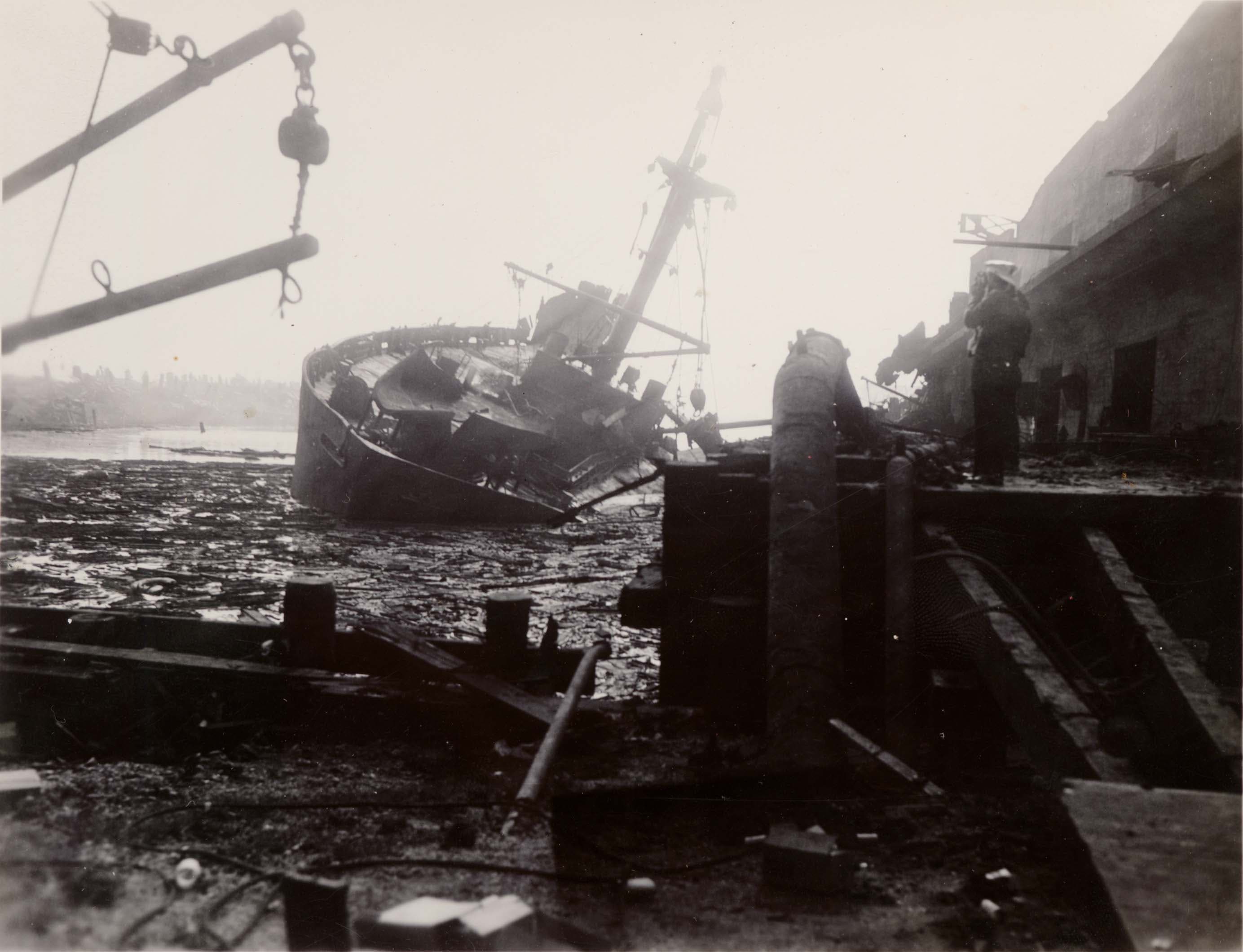
On April 16, 1947, a fire aboard a fertilizer ship in Texas City, Texas, became the worst industrial accident in American history. 581 dead, all 28 volunteer firefighters killed, the entire city devastated. People had gathered to watch the unusual smoke.
They Came Because the Fire Was Beautiful
On the morning of April 16, 1947, at 8:00 a.m., the French cargo ship SS Grandcamp sat at the Texas City port in Texas. Smoke began rising from her No. 4 hold.
The smoke wasn't ordinary gray. It was an unusual orange and yellow — a chemical signal that something dangerous was happening below deck.
A crowd gathered to watch. The Texas City port was a busy industrial hub, but a ship belching multicolored smoke was a rare sight. Children whose fathers worked the docks came after school to look.
None of them knew they would be dead in 30 minutes.
2,300 Tons of Fertilizer
The Grandcamp's cargo: 2,300 tons of ammonium nitrate fertilizer, bound for postwar European reconstruction.
In 1947, most people did not understand how dangerous ammonium nitrate could be. It was fertilizer — surely safe. But ammonium nitrate is the primary ingredient in ANFO, one of the world's most powerful industrial explosives. The 1995 Oklahoma City bombing. The 2020 Beirut port explosion. Same substance.
The captain ordered the cargo hatches sealed and steam pumped into the hold to suppress the fire. It was a fatal mistake. The steam raised the temperature faster, pressure built, and the chemistry accelerated.
9:12 AM — The Explosion
At 9:12 a.m., the SS Grandcamp detonated.
The force was unimaginable.
- The ship's 1.5-ton anchor was hurled 2 miles inland
- Steel fragments weighing over a ton landed 10 miles away
- The shockwave was felt 100 miles away in Louisiana
- Two small aircraft flying near the port were knocked from the sky
- A 4-meter tidal wave swept the docks
Everyone on the docks — workers, families, spectators, and all 28 members of the Texas City Volunteer Fire Department who had responded to the fire — were killed almost instantly.
The Second Explosion
The horror was not yet over.
A second cargo ship, the SS High Flyer, was moored nearby with about 1,000 tons of ammonium nitrate aboard. The first explosion ignited fires that spread to the High Flyer, and at 1:10 a.m. on April 17, a second massive explosion erupted.
The combined toll:
- 581 dead (official count; estimates exceed 600)
- Over 5,000 injured
- 1,000 homes destroyed
- Roughly one-third of the city's 16,000 residents were killed or injured
All 28 Firefighters, Gone
The most heartbreaking single fact: every member of the Texas City Volunteer Fire Department died fighting the fire.
The fire department itself ceased to exist. If a second fire had broken out, no one was left to fight it.
Fire Chief Henry J. Baumgartner had radioed his wife from the dock just before the explosion. "Strange fire. I'm going to take a look." Those were his last words.
It remains the deadliest single incident for U.S. firefighters until 9/11 (343 firefighters killed).
The First Class-Action Lawsuit Against the U.S. Government
Investigation revealed the cause was not random misfortune. The U.S. government had failed to enforce safety regulations on the export shipments of ammonium nitrate. The fertilizer was packed in paper sacks, with no warnings about fire risk.
8,485 victims and family members sued the federal government. It became the first major class-action lawsuit ever filed against the U.S. government.
The Supreme Court initially upheld sovereign immunity, but in 1955 Congress passed special legislation awarding $17 million in compensation (about $200 million in today's dollars).
The disaster transformed U.S. industrial safety regulations, hazardous materials transport rules, and urban planning.
A Forgotten Catastrophe
Despite being the worst industrial accident in American history, Texas City is far less remembered than Pearl Harbor or 9/11. 581 deaths — about a quarter of Pearl Harbor's toll, a fifth of 9/11's — but because it was an industrial accident, history books often pass it by.
Yet the people who died that day in Texas City — children who came to watch the fire after school, the 28 volunteer firefighters who ran toward it — taught a permanent lesson: safety is never a given, and curiosity can be the most dangerous thing of all.
Date: April 16–17, 1947 | Location: Texas City, Texas | Deaths: 581 (including all 28 volunteer firefighters) | Injured: 5,000+
Get new posts by email ✉️
We'll notify you when new posts are published