"Others First" — Arland D. Williams Jr., the Man Who Passed the Lifeline Five Times in the Frozen Potomac
On January 13, 1982, Air Florida Flight 90 crashed into the icy Potomac River in Washington, D.C., and a quiet federal bank examiner named Arland D. Williams Jr. repeatedly handed the rescue helicopter's lifeline to fellow survivors instead of saving himself. By the time the helicopter returned for him the sixth time, he had slipped beneath the frozen water — a selfless act that would make him one of America's most remembered civilian heroes.
A Blizzard, a Bridge, and 30 Seconds of Flight
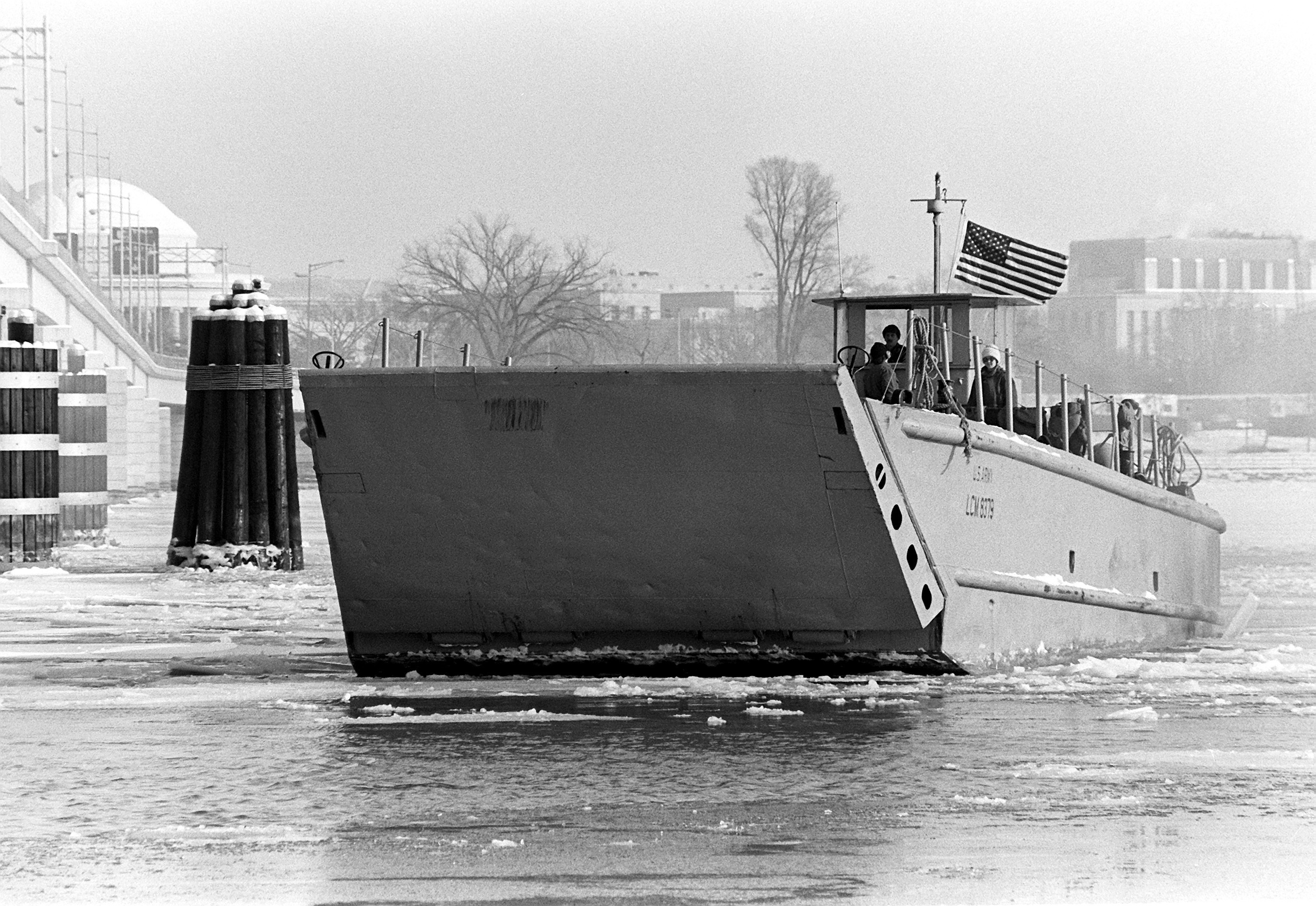
January 13, 1982, was one of the worst winter days Washington, D.C. had seen in years. A heavy snowstorm blanketed the capital, temperatures plunged well below freezing, and sheets of ice floated lazily down the Potomac River. Federal offices let workers leave early, and the city's roads were gridlocked with commuters trying to get home.
At 3:59 p.m., Air Florida Flight 90, a Boeing 737 bound for Fort Lauderdale, attempted to take off from Washington National Airport. The plane had been de-iced, but not adequately. Ice had formed on the engine sensors, giving false readings. Just 30 seconds after lifting off the runway, the aircraft stalled, clipped the 14th Street Bridge — striking seven vehicles and killing four motorists — and plunged nose-first into the frozen Potomac River.
Of the 79 people on board, only six survived the initial impact, clinging desperately to the tail section of the fuselage that remained above the surface. The water temperature hovered near 0°C (32°F). Hypothermia would begin to claim them within minutes.
Eagle One and the Sixth Passenger
The U.S. Park Police helicopter "Eagle One," piloted by Donald Usher with paramedic Gene Windsor, arrived at the crash scene roughly 20 minutes later. There were no boats that could navigate the ice-choked river quickly enough. The helicopter was the survivors' only hope.
Usher lowered a lifeline and flotation ring toward the cluster of survivors. Among them was a balding, mustached middle-aged man. He grabbed the line — and then, instead of securing it around himself, he passed it to the person next to him.
The helicopter ferried that survivor to the riverbank and returned. Again the line was lowered. Again the man caught it. Again he handed it off to someone else.
This happened five times.
Each time the helicopter came back, the man in the water calmly, deliberately gave away his chance at rescue. Flight attendant Kelly Duncan. Passenger Joe Stiley. Priscilla Tirado, who was so weakened she could barely hold on — he pushed the ring into her hands. One by one, five people were pulled from the river because of his repeated, conscious decision to wait.
When Eagle One returned the sixth time — finally, for him — he was gone. The icy Potomac had claimed him. His body was recovered from the river days later.
Who Was He?
In the immediate aftermath, no one knew the man's name. The media called him simply "the Sixth Passenger" or "the man in the water." It was only after investigators cross-referenced the passenger manifest with the five known survivors and recovered remains that they identified him.
His name was Arland D. Williams Jr. He was 46 years old, a federal bank examiner from Atlanta, Georgia, returning from a business trip. He was a U.S. Army veteran who had served during the Vietnam era, a father of two who had gone through a divorce. By all accounts, he was quiet, competent, and unremarkable in the way that millions of working Americans are — the kind of person you might sit next to on a plane without exchanging a single word.
And yet, in the most extreme circumstances imaginable, he revealed a depth of character that stunned a nation.
Not One Act of Courage — Five
What elevates Arland Williams's story beyond the already extraordinary is the repetition of his sacrifice. Many people, in a surge of adrenaline, have performed a single heroic act. Williams did it five consecutive times, each time fully aware that his body was growing weaker, that hypothermia was tightening its grip, that the odds of surviving another round in the freezing water were shrinking.
Helicopter pilot Donald Usher later reflected:
"He could have gone on the first trip. Nobody would have blamed him. But he made a choice, and then he made it again, and again. It wasn't impulse. It was who he was."
Roger Rosenblatt, writing in Time magazine shortly after the disaster, penned a now-famous essay called "The Man in the Water," in which he observed that Williams's act was remarkable precisely because it was not performed by a trained rescuer or a uniformed officer, but by a passenger — a victim — who chose others over himself while death was literally pulling him under.
How America Remembers
Arland Williams's sacrifice was honored in multiple lasting ways:
- Bridge renaming: In 1983, the 14th Street Bridge — the very bridge the plane struck — was officially renamed the Arland D. Williams Jr. Memorial Bridge. It is exceptionally rare for a U.S. bridge to bear the name of a private citizen.
- School dedication: An elementary school near his hometown of Mattoon, Illinois, was named in his honor.
- Posthumous recognition: Williams received the U.S. Coast Guard's Gold Lifesaving Medal and was recognized by the Carnegie Hero Fund Commission.
Survivor Priscilla Tirado, whom Williams helped save, spoke about him in interviews years later:
"I remember his face in the water. He didn't say a word, but his eyes told me to take the line. I owe him my life, and I have never forgotten that."
The Ordinary Man and the Extraordinary Choice
Arland D. Williams Jr. was not a firefighter, not a soldier on duty, not a trained lifeguard. He was a man with a briefcase and a boarding pass, heading home from a work trip on a snowy Wednesday afternoon.
But in the frozen water of the Potomac, with death closing in by the second, he made the most profound choice a human being can make — and he made it not once, but five times. Each time the lifeline came to his hand, he let it go. Each time, someone else lived because of it.
"Others first." Two words that contain the highest aspiration of the human spirit.
Today, every car that crosses the Arland D. Williams Jr. Memorial Bridge passes over the very spot where a quiet, unremarkable man performed one of the most remarkable acts of selflessness in American history. The bridge stands not just as a span of concrete and steel, but as a reminder: heroes are not born in capes and uniforms. They are revealed in moments of impossible choice — when an ordinary person decides, again and again, that someone else's life matters more than their own.
Arland Williams handed the rope away five times. And in doing so, he handed us something we carry to this day — proof that ordinary people are capable of extraordinary grace.
Get new posts by email ✉️
We'll notify you when new posts are published