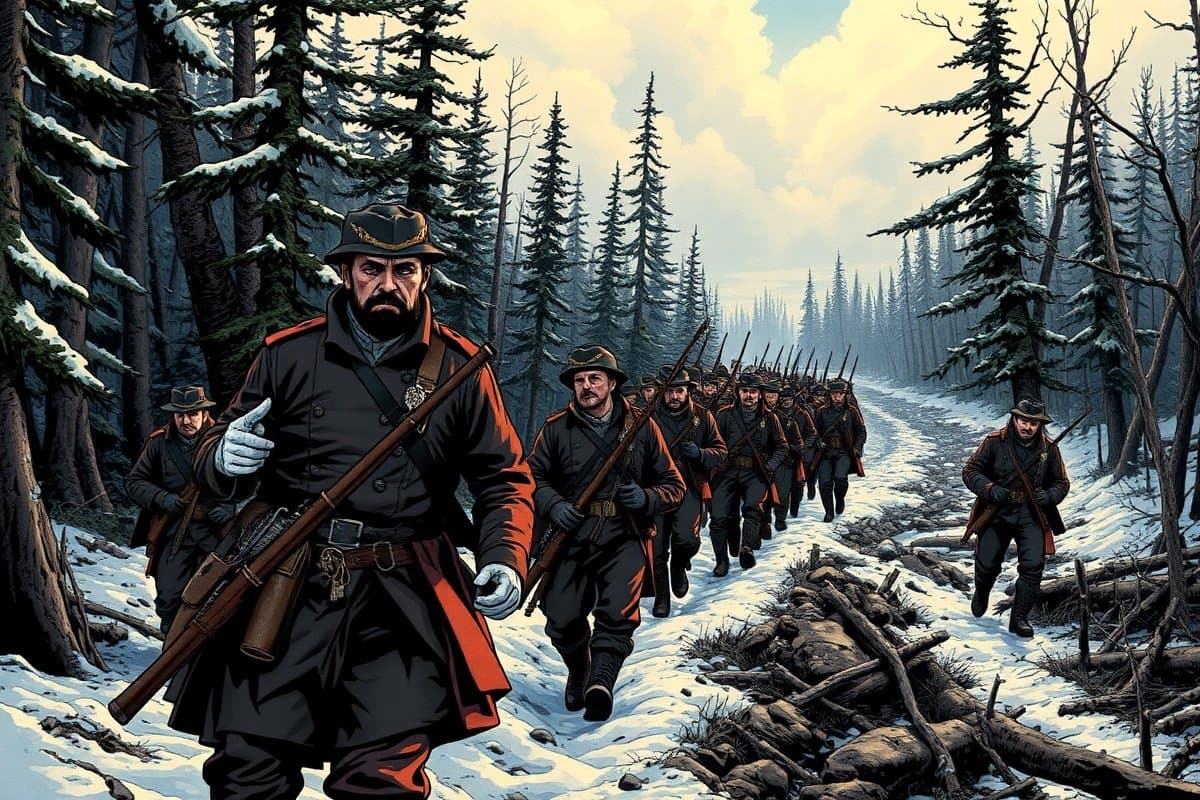
Into the Wilderness — Benedict Arnold's Impossible March to Quebec (1775)
In September 1775, Benedict Arnold led 1,100 men through the Maine wilderness to surprise-attack Quebec. The map was wrong, food ran out, rivers ran backward. Only 350 men survived to stand before the walls of Quebec.
Congress's Gamble
In August 1775, the Continental Congress voted to invade Canada. Capturing Canada would cut off Britain's northern attack route.
The plan was two-pronged. General Richard Montgomery would push north toward Montreal, while Benedict Arnold would cut through the Maine wilderness to surprise Quebec.
The problem was Arnold's route. It was unmapped wilderness.
The Map Was Wrong
Arnold calculated the distance at 200 miles and estimated three weeks. The actual distance was 350 miles.
1,100 men set out. They paddled upstream, portaged over waterfalls, waded through swamps. Boats capsized and swept food downstream. In October, snow began to fall.
Soldiers boiled their moccasins for food. They ate their dogs.
350 Men
Six weeks in, when they reached the Canadian border, 350 men remained. More than half had been lost to starvation, cold, and desertion.
Arnold didn't stop. He led 350 men to the walls of Quebec.
The Quebec garrison numbered 1,800.
Siege and Failure
Montgomery captured Montreal and joined Arnold. On December 31, 1775, the two forces attacked Quebec in a blizzard. Montgomery was killed. Arnold was wounded. The assault failed.
Canada never joined the American cause. But Arnold's march stands as one of the most reckless and tenacious military operations in history.
Period: September–December 1775 | Starting strength: 1,100 | Arrived at Quebec: 350 | Actual distance marched: ~350 miles
Get new posts by email ✉️
We'll notify you when new posts are published