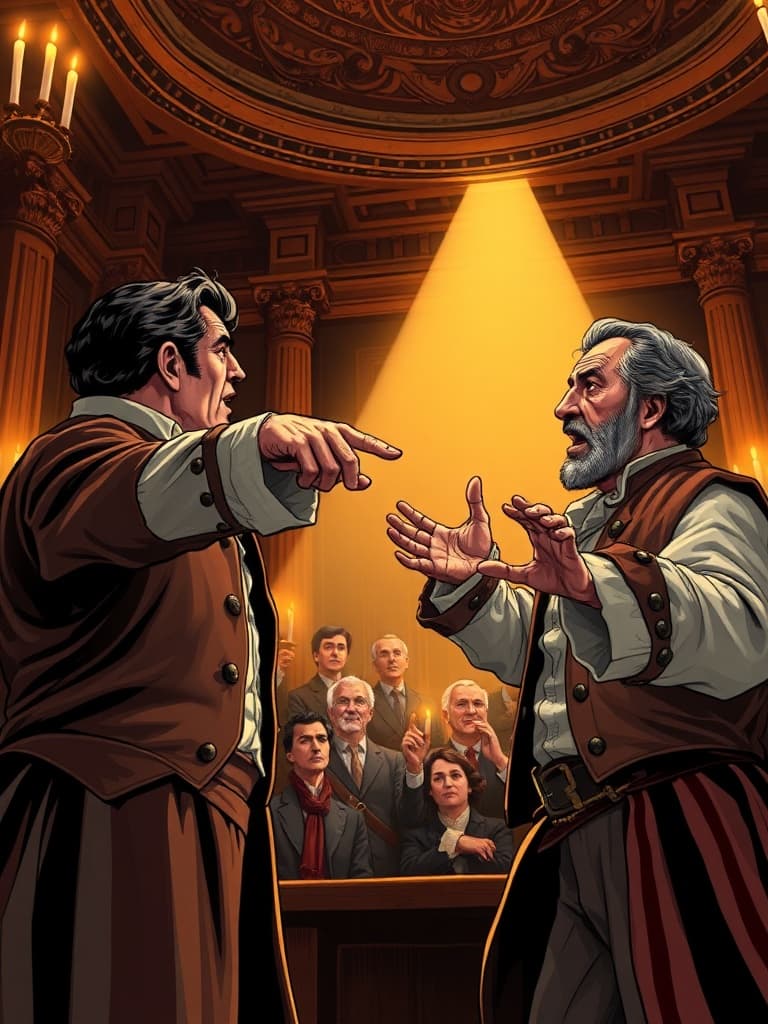
They Sent a Loyalty Letter While Building an Army — The Second Continental Congress
On May 10, 1775, delegates gathered in Philadelphia to figure out what to do about a war nobody had planned. Their solution was characteristically contradictory: pledge loyalty to the king while simultaneously raising an army against him.
When the Second Continental Congress convened in Philadelphia on May 10, 1775, the delegates faced an impossible situation. Blood had been spilled at Lexington and Concord three weeks earlier. Thousands of militia surrounded Boston. The colonies were, by any reasonable definition, at war with Great Britain.
But most of the men sitting in the Pennsylvania State House did not want a war, and they certainly did not want independence. They wanted reconciliation. They wanted the king to listen. They wanted things to go back to the way they were before Parliament started taxing everything in sight.
So they did what politicians often do when faced with contradictory pressures: they tried to have it both ways.
The Olive Branch Petition
In July 1775, Congress drafted the Olive Branch Petition — a respectful, almost pleading letter addressed directly to King George III. The petition affirmed the colonists' loyalty to the crown and asked the king to intervene against Parliament's oppressive policies. It blamed "artful and cruel enemies" around the king for the current troubles, carefully avoiding any criticism of George himself.
The language was deliberately submissive. The delegates who wrote it genuinely believed that if they could just get the king's attention, he would see reason and restore peace.
At the same time — literally during the same sessions — Congress was organizing a Continental Army, appointing officers, authorizing the printing of money to fund military operations, and debating how to acquire gunpowder. They were writing a love letter with one hand and loading a musket with the other.
Choosing Washington
The most consequential decision Congress made that summer was selecting George Washington as commander-in-chief of the Continental Army. The choice was driven as much by politics as by military qualifications.
Washington was from Virginia. The fighting so far had been entirely in Massachusetts, led by New England men. If this was going to be a unified colonial effort rather than a New England rebellion, the commander needed to come from somewhere else. Virginia was the largest and wealthiest colony. A Virginian in command would bind the southern colonies to the cause.
Washington also looked the part. He was tall, imposing, and carried himself with natural authority. He had military experience from the French and Indian War — though his record there was mixed at best. He showed up to Congress wearing his old military uniform, which was either a subtle campaign or just what he happened to pack. Either way, it worked.
John Adams of Massachusetts nominated him. The vote was unanimous. Washington accepted the command and, in a gesture that impressed everyone, refused a salary, asking only that Congress cover his expenses. Those expenses would eventually total a considerable sum, but the gesture mattered.
George III Says No
The Olive Branch Petition crossed the Atlantic and arrived in London in August 1775. King George III refused to read it. He would not even receive the colonial agents who delivered it. Instead, he issued a Royal Proclamation declaring the colonies to be in a state of open rebellion and ordering the suppression of the revolt by force.
The king's refusal destroyed the moderate position in Congress. Delegates who had argued for reconciliation suddenly had nothing to argue for. The man they had addressed with such deference had dismissed them as traitors without even reading their words.
It would take almost another year before Congress worked up the nerve to declare independence. But the path was set the moment George III threw their letter away. The moderates had gambled on the king's reasonableness, and they had lost.
The contradictions of the Second Continental Congress — loyalty and rebellion, petition and army — were not signs of confusion. They reflected the genuine uncertainty of men who were stumbling into a revolution they had not planned and were not sure they wanted. History would force their hand soon enough.
Get new posts by email ✉️
We'll notify you when new posts are published