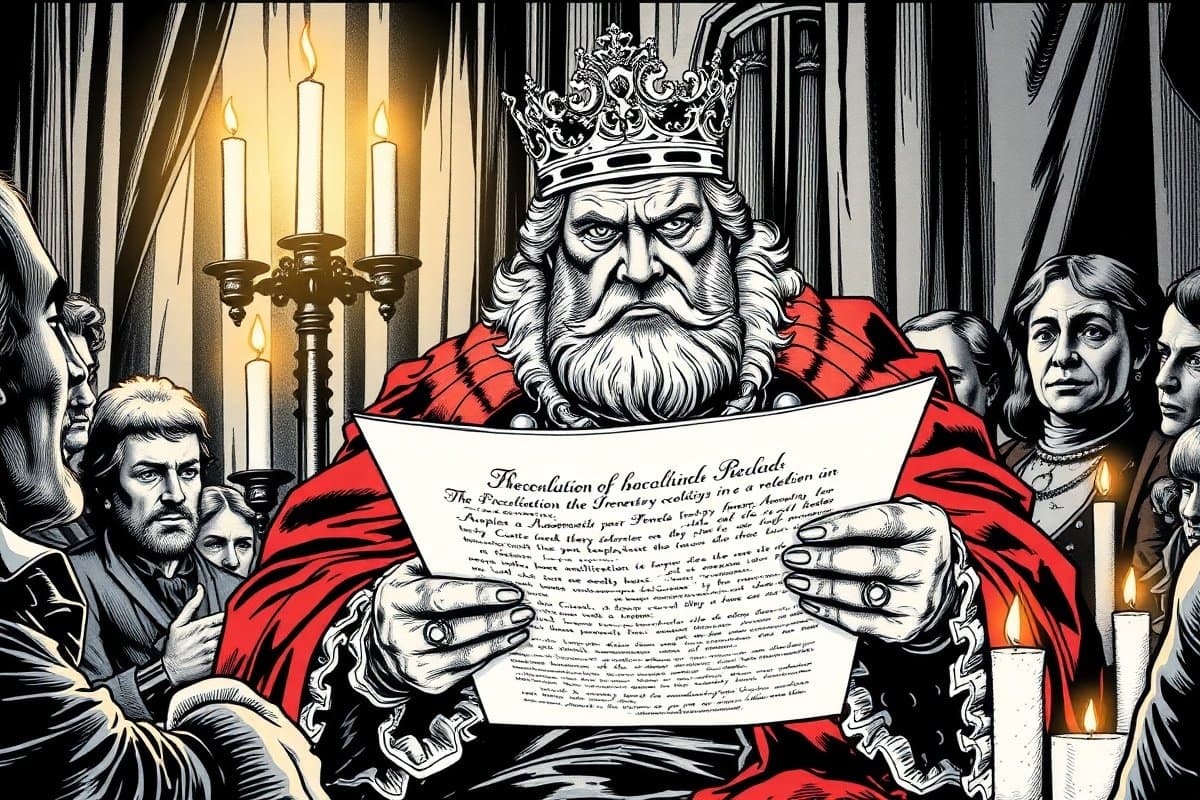
The King Declared It — George III Labels the Colonies in Rebellion (August 23, 1775)
A month after the colonies sent a peace letter to the king, George III refused to even read it — and declared all the colonies in a state of rebellion. The door to negotiation slammed shut.
They Offered an Olive Branch
On July 5, 1775, the Second Continental Congress sent a letter to King George III. History calls it the Olive Branch Petition. The message was essentially this:
"We do not seek rebellion. We only wish to preserve our rights as British subjects. Let us talk."
Many in the Continental Congress still preferred reconciliation over independence. This letter was their last attempt at negotiation.
The King Never Read It
By the time the letter reached London, George III had already made up his mind. He refused to officially receive the Olive Branch Petition.
Instead, on August 23, 1775, the king issued the Proclamation for Suppressing Rebellion and Sedition.
The message was simple: the colonies are in a state of rebellion. All loyal British subjects are duty-bound to report traitors.
The Door Closes
The proclamation meant two things.
First, George III had no intention of negotiating with the colonies. Second, colonists were no longer British subjects with grievances — they were rebels.
In the Continental Congress, the voices calling for reconciliation fell quiet. They had sent a peace letter. They received a label: traitors.
Ten Months to Independence
Ten months after the king's proclamation, on July 4, 1776, the Continental Congress adopted the Declaration of Independence.
The moment George III refused to negotiate, independence stopped being a choice and became inevitable. The king had made his own enemies.
Date: August 23, 1775 | Document: Proclamation for Suppressing Rebellion and Sedition | Time to Declaration of Independence: 10 months
Get new posts by email ✉️
We'll notify you when new posts are published