70 Farmers Stood Against 700 British Soldiers — The Battles of Lexington and Concord
On April 19, 1775, a small group of colonial militia faced down a massive British force on Lexington Green. What followed would ignite a revolution and change the course of history forever.
On the morning of April 19, 1775, about 70 men gathered on the green in Lexington, Massachusetts. They were not professional soldiers. They were farmers, shopkeepers, and tradespeople. Across from them stood roughly 700 British regulars — trained, armed, and marching with purpose.
The British had a clear objective: march to Concord and seize the colonial weapons stockpile stored there. Intelligence reports had confirmed that the colonists were amassing arms, and General Thomas Gage wanted them destroyed before things got out of hand.
The Shot Heard Round the World
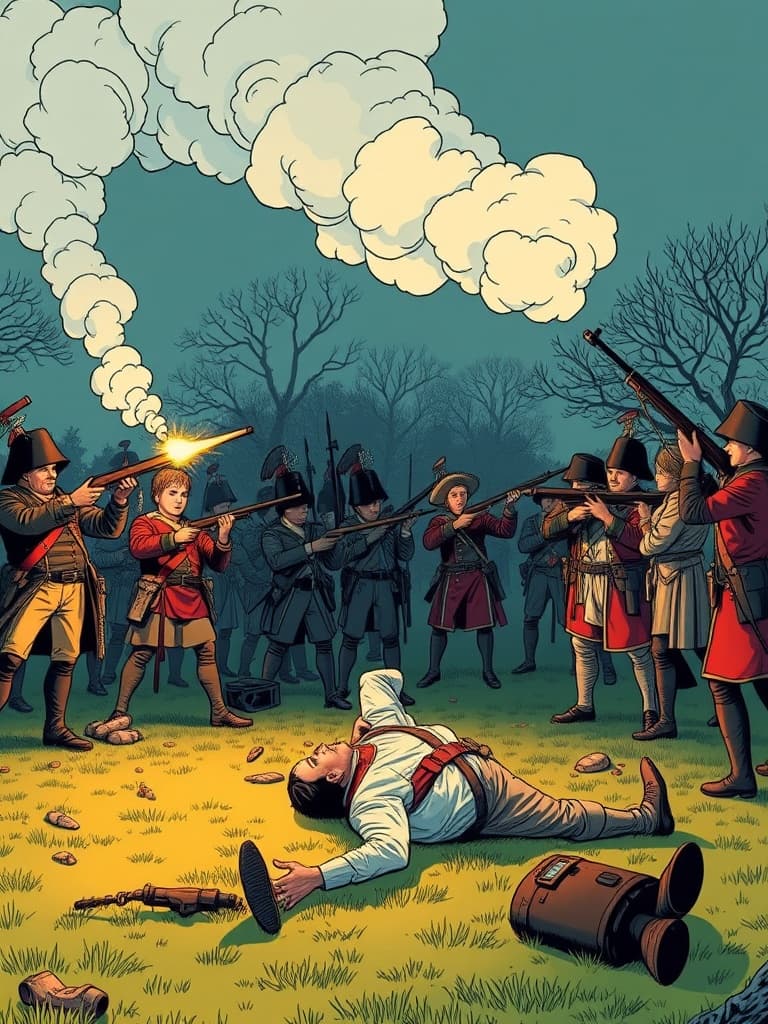
No one knows who fired first. The British commander ordered the militia to disperse, and for a moment it seemed like they might. Then a shot rang out. Within seconds, the British opened fire on the small band of militia. Eight colonists lay dead, ten more wounded. The entire exchange lasted only minutes.
But here is the part the British did not expect: the colonists had already moved most of the weapons.
Paul Revere and William Dawes had ridden through the night to warn the countryside. By the time the redcoats reached Concord, there was almost nothing left to find. A few gun carriages, some flour, that was about it. The mission that justified sending 700 soldiers into hostile territory had already failed before they arrived.
The March Back Changed Everything
The British found little at Concord and began their march back to Boston. That is when the day turned into a disaster.
Word had spread across the Massachusetts countryside. Militia companies from dozens of towns were converging on the road between Concord and Boston. They did not line up in neat rows the way European armies fought. They hid behind stone walls, trees, and farmhouses. They fired and moved, fired and moved.
The British column stretched thin along the narrow road. Officers on horseback made easy targets. Flanking parties sent out to clear the roadsides found themselves ambushed by yet more militia appearing from the woods.
By the time reinforcements from Boston met the retreating column in Lexington, the damage was severe. The combined British force fought its way back to Charlestown under constant fire for miles.
The Numbers Tell the Story
The final casualty count stunned both sides. The British suffered 273 casualties — 73 killed, 174 wounded, and 26 missing. The colonial militia lost 95 men, with 49 killed, 39 wounded, and 5 missing.
An army of farmers and tradesmen had inflicted nearly three times the casualties they suffered against one of the most powerful military forces in the world. The myth of British invincibility cracked that day.
What It Meant
Lexington and Concord did not decide the war. That would take six more years of brutal fighting. But these battles proved something that many colonists had doubted: they could fight the British and survive. More than survive — they could win engagements.
News of the battles spread through the colonies like wildfire. Militia companies began forming everywhere. Within weeks, thousands of armed colonists surrounded Boston, trapping the British garrison inside the city.
The American Revolution had begun, not with a grand declaration or a formal army, but with 70 ordinary men who refused to step aside on a village green.
Get new posts by email ✉️
We'll notify you when new posts are published