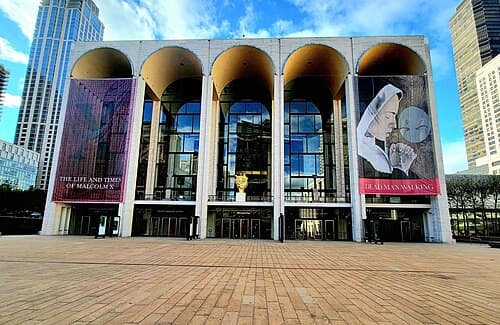
Denied a Box Seat, They Built Their Own Opera House: The Birth of the Metropolitan Opera
In 1880s New York, when tycoons like Vanderbilt and JP Morgan were refused box seats at the Academy of Music, they did what billionaires do best — built something bigger. The deliciously petty origin story of the world's greatest opera house.
"No seats available?" "Fine. We'll build our own."
The most satisfying revenge in history wasn't carried out with swords or guns. Sometimes, it's carried out with architecture.
New York, the 1880s. The city's cultural pride was concentrated in a single venue: the Academy of Music on 14th Street in Manhattan. Opened in 1854, this roughly 4,000-seat opera house was the largest in America and the epicenter of New York high society.
But it had an unwritten rule: Box seats are for "real" aristocrats only.
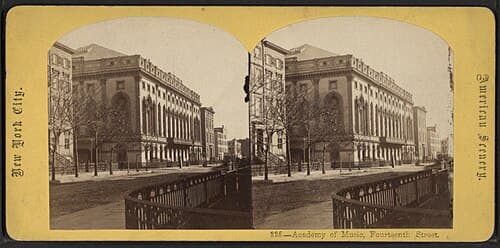
All the Money, No Seat
In 1880s New York, there were two kinds of wealthy.
The Old Guard (Knickerbockers): Families rooted in New York since the Dutch colonial era. Names like Astor, Livingston, and Schuyler opened doors on reputation alone. They held a tight grip on the Academy's 18 box seats.
The New Money (Nouveau Riche): Self-made billionaires who amassed fortunes through railroads, oil, and finance. Cornelius Vanderbilt, JP Morgan, John D. Rockefeller, Jay Gould... Their combined wealth dwarfed the Old Guard's, yet they were powerless before the Academy's velvet ropes.
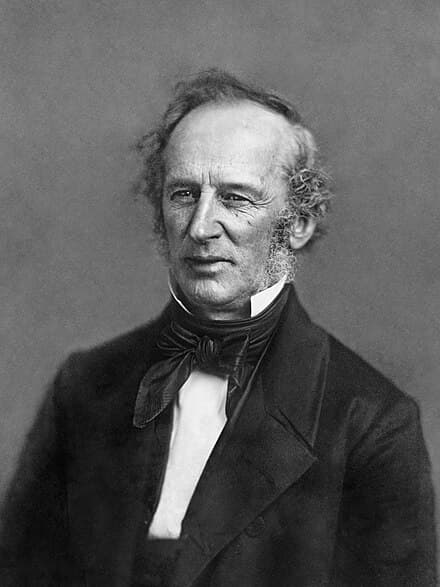
When the Vanderbilt family offered to buy a box seat, the Academy's answer was cold:
"There are no seats available."
Translation: "You have the money, but not the pedigree."
When Fury Becomes Architecture
An ordinary person might have swallowed their pride. But these were the richest people in American history.
In 1880, the new money moguls gathered and resolved:
"Let's build something bigger, grander, and better."
In just three years, the Metropolitan Opera House rose on Broadway at 39th Street. It opened on October 22, 1883. The numbers told the story:
| Academy of Music | Metropolitan Opera | |
|---|---|---|
| Seats | ~4,000 | ~3,700 |
| Box Seats | 18 | 70+ |
| Vibe | Exclusive social club | If you can pay, welcome |
The key was those 70+ box seats. While the Academy played "members only" with 18, the Met said "all are welcome" — provided "all" meant billionaires, of course.
Opening Night: History Changes Course
The inaugural performance was Gounod's Faust — the story of a man who sells his soul to the devil for youth. In retrospect, a rather fitting choice. The new tycoons had essentially purchased "class" with cash.
That night, New York society's eyes weren't on the stage — they were on the boxes. What dress Mrs. Vanderbilt wore, who accompanied Morgan — these were the next morning's front-page headlines.
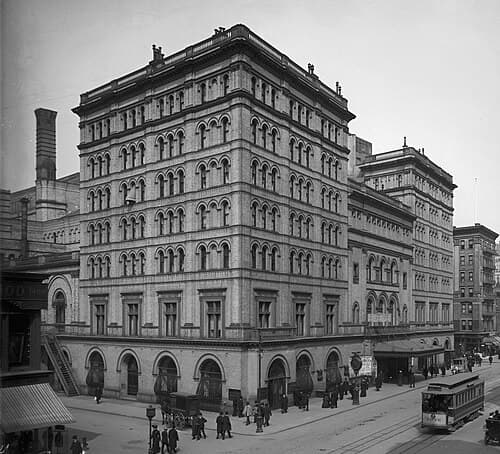
The Academy's Fall
The moment the Met opened, the Academy of Music went into rapid decline. The best singers migrated to the Met, and audiences followed. By 1886, the Academy ceased opera performances entirely. In just three years, the Met had brought the Academy to its knees.
The Academy building was subsequently repurposed as a movie theater and concert venue before being demolished in 1926. Today, the Consolidated Edison (ConEd) headquarters stands on that site — at 14th Street and Irving Place, Manhattan. Where New York's cultural heart once beat, an electric company now runs its operations.
Fun fact: Philadelphia also has an Academy of Music (opened 1857), and that one is still going strong as the oldest continuously operating opera house in the United States.
The Met After That
The original Met Opera House on Broadway at 39th Street operated for 83 years before relocating to a new building at Lincoln Center in 1966. The current Met features two massive Marc Chagall murals in the lobby, seats 3,800, stages over 200 performances annually, and stands as the world's most prestigious opera house.
A billionaire grudge match from 140 years ago became a treasure of human civilization.
🎬 Want to See This Era?
HBO's The Gilded Age (2022) is set precisely in this period. In Season 1, the opera war between old money and new money is a central plotline — the show's "Brook Academy" is modeled on the Academy of Music, while the "New Opera House" represents the Met. Meryl Streep joins the cast in Season 2.
The Lesson: Never Underestimate Someone You've Turned Away
If the Academy of Music had simply sold Vanderbilt one box seat, the Met Opera might never have been born. History's irony at its finest. Sometimes, the person you reject is the one who changes the world. Just as Steve Jobs was dismissed by IBM before creating Apple, Vanderbilt and Morgan were turned away from an opera box — and went on to build the greatest opera house on earth.
Don't close the door. The person outside might build something bigger right next to you.
Image credits: Wikimedia Commons / Library of Congress (all public domain)
Get new posts by email ✉️
We'll notify you when new posts are published