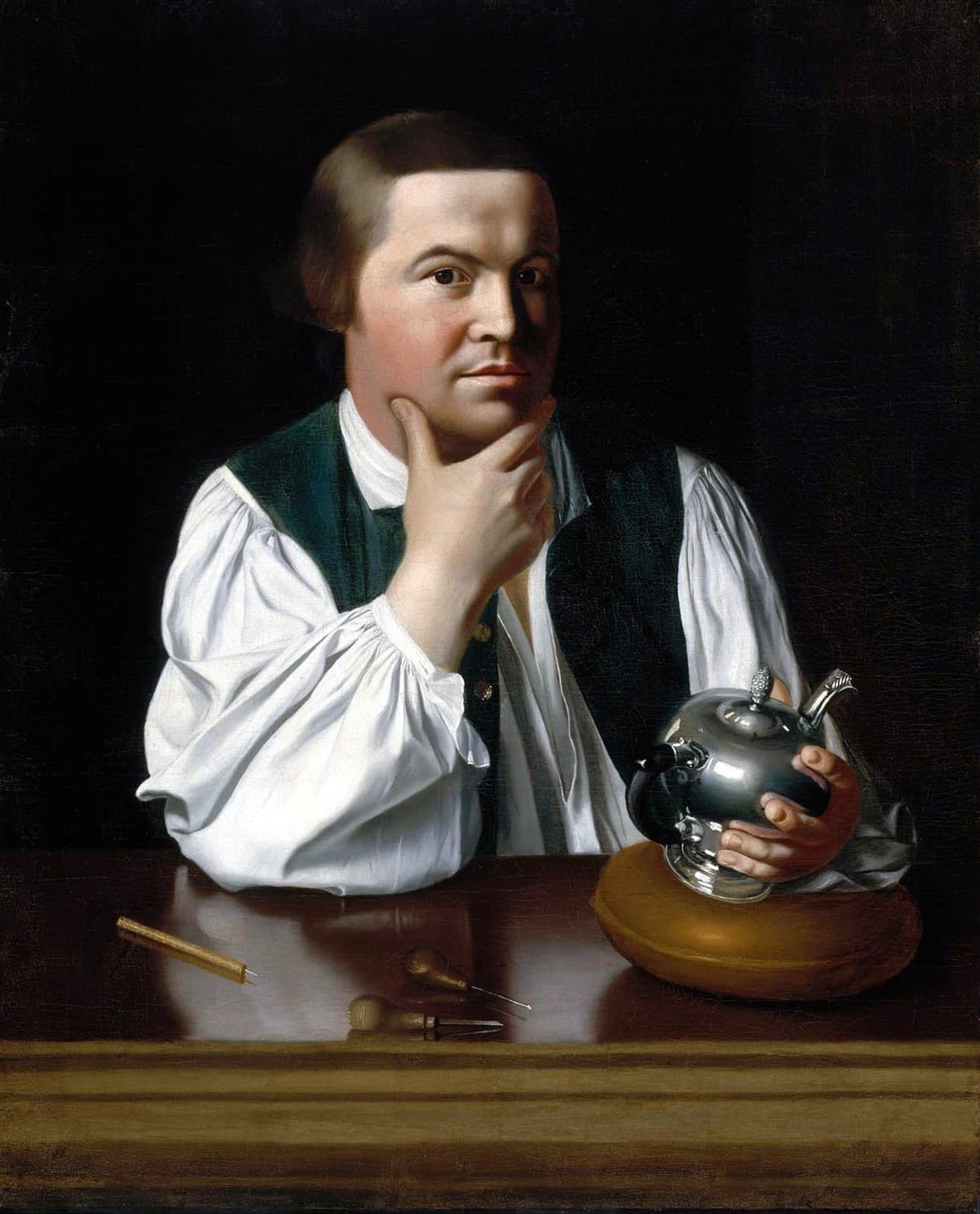
"The British Are Coming!" — April 18, 1775, Paul Revere's Midnight Ride
On the night of April 18, 1775, Boston silversmith Paul Revere rode through the Massachusetts countryside to warn colonial militia that British troops were marching to seize their weapons. His midnight ride triggered a chain reaction that led to the first shots of the American Revolution.
10 PM, Boston
On the night of April 18, 1775, Boston was taut with tension. Word had reached the colonial intelligence network: 700 British regulars were preparing to march from Boston toward Concord, where the colonial militia had hidden their weapons and ammunition.
At 10 p.m., silversmith and intelligence operative Paul Revere crossed the Charles River and mounted a borrowed horse. Simultaneously, another rider, William Dawes, set out by a different route.
Their mission was singular: warn the militia at Lexington and Concord that the British were coming.
The Midnight Ride
Revere reached Lexington around midnight and alerted John Hancock and Samuel Adams — key leaders of the Continental Congress and targets for British arrest.
Revere, Dawes, and a third rider, Dr. Samuel Prescott, then rode toward Concord. But Revere was captured by a British patrol. Dawes fell off his horse. Only Prescott made it through to Concord.
Did Revere's capture change history? No. His real contribution was not reaching Concord himself but triggering a chain of alarm riders across dozens of towns. By dawn, hundreds of militiamen were awake, armed, and ready.
April 19, 1775 — The First Shot
At dawn, Lexington Green. About 70 colonial militiamen faced 700 British regulars. No one knows who fired first. One shot rang out, then a British volley.
Eight militiamen were killed. That single shot — the "shot heard round the world" — was the beginning of the American Revolution.
The British marched on to Concord, but thanks to the warnings, the militia had already moved their weapons. On the return march, hundreds of militiamen ambushed the British from behind trees and stone walls. The British suffered 273 casualties and retreated to Boston.
The Silversmith Who Made a Nation
Paul Revere was not a soldier. He was a Boston silversmith and engraver. What he did that night was simple — he rode a horse.
But that one man's ride triggered a chain reaction. Dozens of towns awakened. The next morning, the first shots were fired at Lexington. Eight years later, those shots became the United States of America.
Date: April 18–19, 1775 | Route: Boston → Lexington → Concord, Massachusetts | Key Figures: Paul Revere, William Dawes, Samuel Prescott
Get new posts by email ✉️
We'll notify you when new posts are published