The News Races Across the Continent — Week 2 After Lexington
The shots fired at Lexington ripple south to Virginia, the Carolinas, and Georgia. Women organize supply lines, Gage begs London for reinforcements, and Benedict Arnold eyes Fort Ticonderoga.
The News Reaches Virginia
The gunfire at Lexington and Concord on April 19 traveled south on horseback, carried by express riders who barely slept. Within a week it reached Virginia, where the colony was already simmering.
Patrick Henry had delivered his famous "Give me liberty, or give me death" speech just a month earlier, urging the Virginia legislature to prepare for armed conflict. Many had dismissed him as a radical. Now Lexington proved him right. Volunteer numbers for the Virginia militia surged overnight. The Carolinas and Georgia reacted the same way. For the first time, all thirteen colonies felt the same fury over the same news.
Arnold's Bold Proposal
In Connecticut, a sharp-minded militia captain named Benedict Arnold saw opportunity in the chaos. He had learned that Fort Ticonderoga, a British outpost in northern New York, held a large stockpile of cannons and ammunition — and that its garrison was small and complacent.
Arnold approached the Massachusetts Committee of Safety with a daring plan: seize the fort before the British could reinforce it. Without heavy artillery, the colonial militia besieging Boston had no way to force the British out. Ticonderoga's cannons could change everything. This was long before Arnold's name became synonymous with betrayal. In the spring of 1775, he was one of the sharpest tactical minds on the American side.
Gage's Desperate Letter
Inside Boston, British commander General Thomas Gage sat down to write London. His message was blunt: send 20,000 reinforcements immediately. He had roughly 6,500 troops, and more than 15,000 militia had gathered in a ring around the city. Gage understood the gravity of the situation better than anyone in Parliament, but his letter would take six weeks to cross the Atlantic. By the time London read it, the world would have changed again.
The Women Who Built the Supply Lines
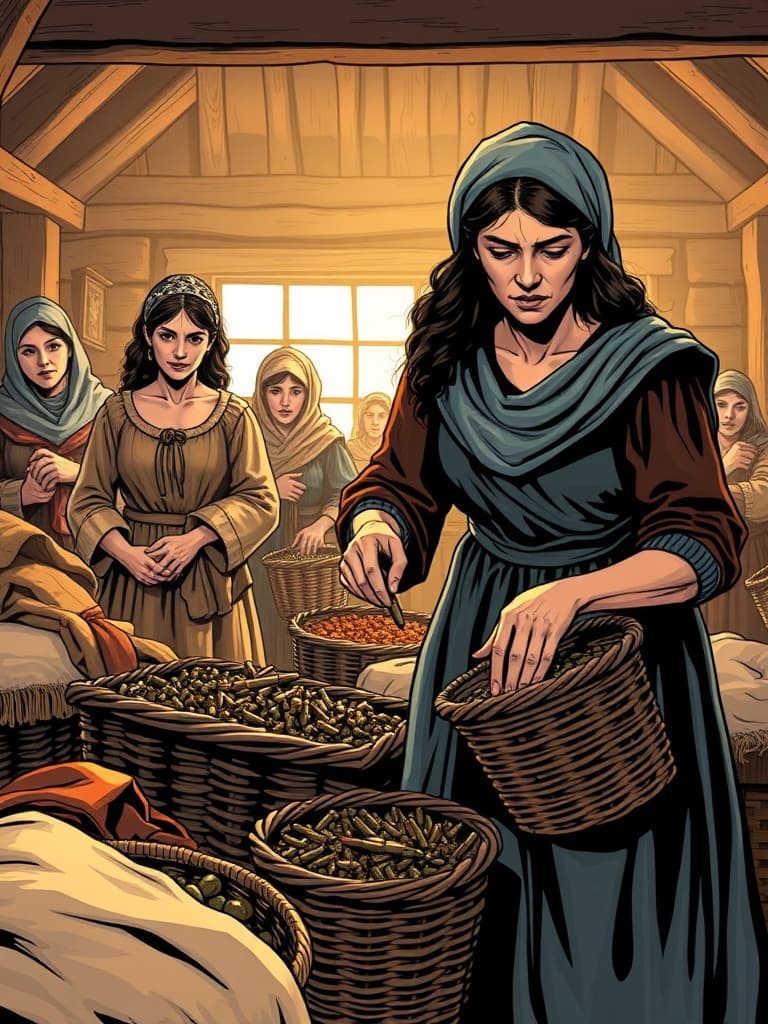
Here is a part of the story that textbooks often skip. When the siege of Boston began, the militia desperately needed food, blankets, and bandages. The people who solved this problem were overwhelmingly women. Martha Washington and countless others organized collection drives, mapped transport routes, and kept the improvised army fed and clothed. War is not only fought by those who carry muskets.
Committees of Safety and the Loyalist Exodus
Across the colonies, Committees of Safety sprang up to replace British-appointed governors. These were revolutionary governments in all but name. They mustered militia, procured weapons, and kept watch on anyone suspected of loyalty to the Crown.
On the other side, Loyalists — colonists who remained faithful to King George — began to feel the pressure. Shops refused their business. Neighbors threatened them openly. Many started fleeing to British-held Boston, Canada, or the West Indies. Revolution was not only a fight against an external enemy; it was a fracture running through neighborhoods and families.
What had been a local skirmish two weeks earlier was now a continental crisis. There was no going back.
Get new posts by email ✉️
We'll notify you when new posts are published