They Stole a Fort at Dawn — The Capture of Fort Ticonderoga (May 10, 1775)
Ethan Allen's Green Mountain Boys — 83 men — captured Fort Ticonderoga without firing a single shot. The 83 cannons they seized would later free Boston.
Two Beginnings on the Same Day
May 10, 1775 was a day history started twice. In Philadelphia, the Second Continental Congress convened to decide the fate of the colonies. Five hundred kilometers north, on the shores of Lake Champlain in New York, a band of men climbed into boats and rowed into the predawn darkness.
Their target was Fort Ticonderoga — a stone fortress built by the French during the French and Indian War, now garrisoned by just 48 British soldiers. Inside its walls sat 83 cannons, mortars, and a generous supply of ammunition. For the militia besieging Boston with nothing heavier than muskets, those weapons were priceless.
Ethan Allen and the Green Mountain Boys
The man leading the raid was Ethan Allen, a towering figure from the Vermont frontier. He was no regular army officer. Allen commanded the Green Mountain Boys, a militia originally formed to resist New York's land claims over Vermont territory. He had been a rebel long before the Revolution gave him a cause.
Allen brought 83 men. Benedict Arnold, who had received an official commission from Connecticut to take the fort, arrived and demanded joint command. Allen's men refused to follow anyone else. Arnold swallowed his pride and marched alongside Allen at the front.
Victory Without a Shot
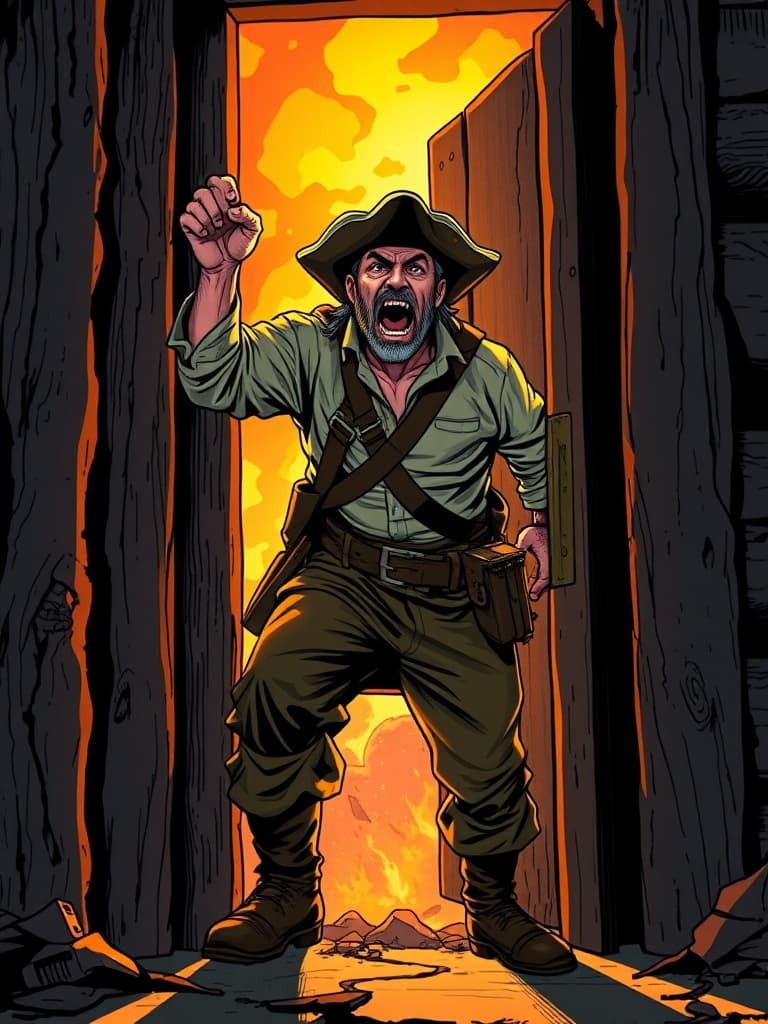
At dawn, the sentries were dozing. Allen and his men scaled the walls and poured into the fort. Allen strode to the commander's quarters and kicked the door open, bellowing:
"In the name of the Great Jehovah and the Continental Congress!"
The British commander, still in his nightclothes, had no choice but to surrender. All 48 British soldiers became prisoners without a single musket being fired. No one was wounded. No one died. It was one of the cleanest military victories in the history of warfare.
83 Cannons, 480 Kilometers
The true value of those cannons would not become clear for months. When winter arrived, a 25-year-old artillery officer named Henry Knox was tasked with the near-impossible job of hauling them 480 kilometers overland to Boston. Across frozen lakes, through mountain passes, and over rivers — Knox and his men dragged the guns south on ox-drawn sleds.
By March 1776, those cannons sat on Dorchester Heights overlooking Boston Harbor. The British, suddenly staring down the barrels of their own artillery, evacuated the city. The weapons that freed Boston had been sleeping in a forgotten fort on Lake Champlain.
The First Offensive Action
Lexington and Concord had been defensive — the British came to the colonists. Ticonderoga was different. This was a raid planned and executed by Americans on their own initiative. It was not resistance; it was an act of war.
On the morning of May 10, eighty-three militiamen stole a fort, and the cannons inside that fort changed the course of the Revolution. Sometimes the biggest turning points begin with the smallest forces — a few dozen men, a couple of boats, and the nerve to act before dawn.
Get new posts by email ✉️
We'll notify you when new posts are published