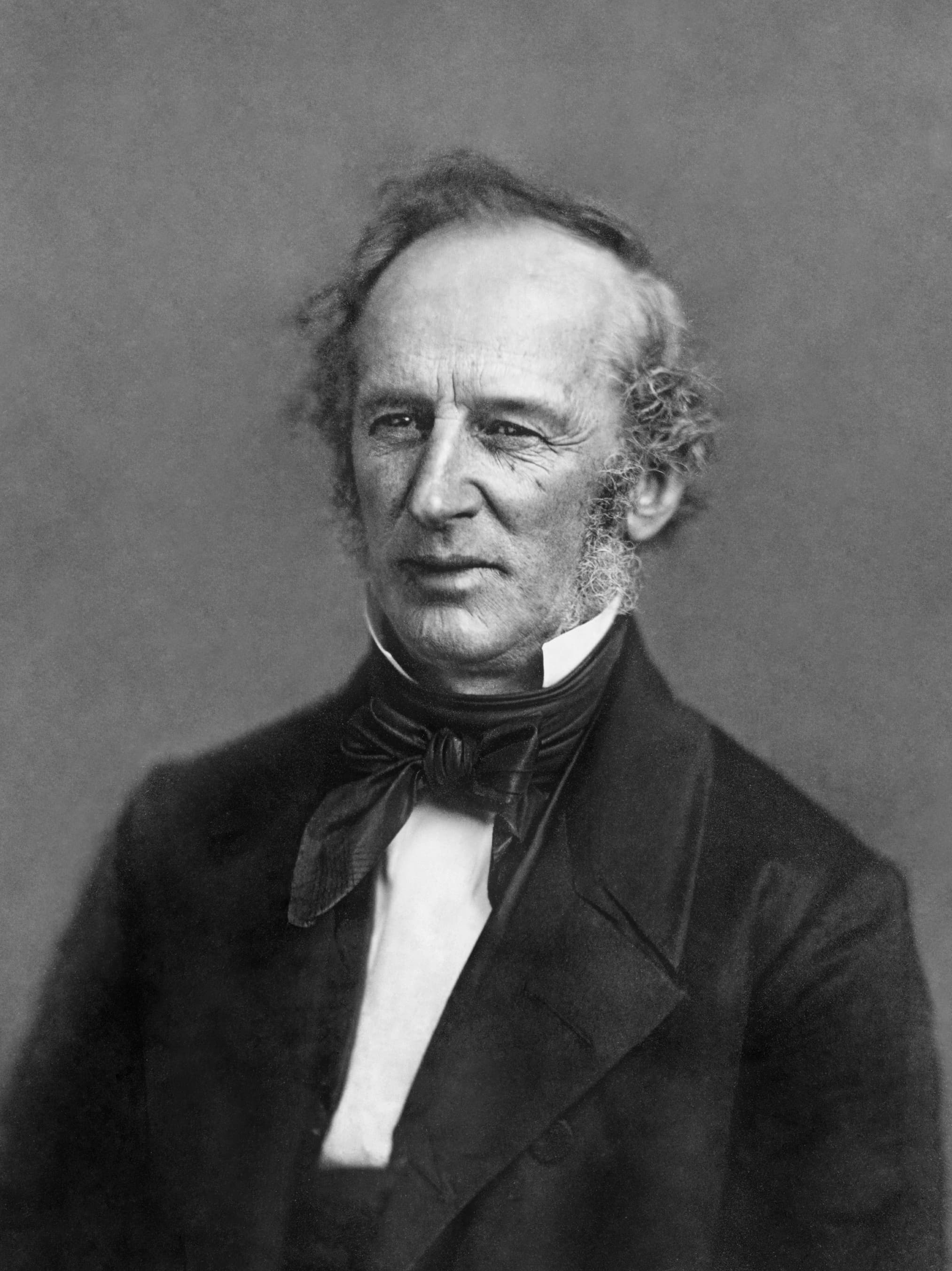
The Commodore — Cornelius Vanderbilt and the American Railroad Empire (1865)
A boy who quit school in 6th grade became the richest man in America. From steamboats to railroads — the man they called "Commodore."
Age 16, $100
- Staten Island, New York.
Vanderbilt was born to a poor farming family. He quit school in the 6th grade. He stayed awkward with writing his entire life.
At 16, he borrowed $100 from his mother. He bought a small boat. Hauling cargo across New York Harbor. The beginning.
Emperor of the Steamships
From the 1820s to the 1850s, he dominated steam shipping along the U.S. East Coast.
- Slash fares → bankrupt rivals → restore prices on his own terms
- Run cheaper than government-subsidized companies
- During the California Gold Rush, opened a Nicaraguan isthmus route
The papers called him "the Commodore." He loved the nickname until the day he died.
By the late 1850s, his fortune was $11 million. One of the wealthiest men in America.
A Second Life at 70
- He was nearly 70. He liquidated all his steamship holdings.
The reason: railroads were the future.
New York and Harlem Railroad. Hudson River Railroad. New York Central. He bought and merged them. By 1869, he controlled a continuous rail line from New York to Chicago.
A 70-year-old man rebuilt half of American railroading.
Grand Central
- In the heart of Manhattan, he built Grand Central Depot.
The largest train station in the world at the time. The predecessor of today's Grand Central Terminal.
In that moment, New York became the center of American transportation. Until then it had competed with Boston and Philadelphia.
William H. Vanderbilt's Line
- Cornelius Vanderbilt died at 82.
Estate: $100 million. 1/87 of U.S. GDP. Twice the entire annual federal budget.
His son William inherited the empire. Eight years later, William too died. The family fortune had doubled to $200 million.
A reporter asked William: "Would you lower freight rates for the public?"
His answer defined the Gilded Age.
"The public be damned."
Completing the Big Four
Vanderbilt (steamboats, railroads) → already dead, but he laid the infrastructure foundation.
Then came:
- Rockefeller (oil, 1870s)
- Carnegie (steel, 1880s)
- J.P. Morgan (finance, 1871–)
These four were the capital titans of the Gilded Age. But Vanderbilt started it all.
Born: 1810 | Starting capital: $100 (1827) | Died: 1877 | Estate: $100 million ($230 billion today) | Nickname: "The Commodore"
Get new posts by email ✉️
We'll notify you when new posts are published