The Camera That Changed War — How Matthew Brady Photographed the Civil War
In 1861, Mathew Brady spent his entire fortune to bring cameras to the battlefield. The photographs he and his team produced showed Americans the true face of war for the first time — and changed history.
The Camera That Changed War
How Matthew Brady Photographed the Civil War
October 1862. 349 Broadway, New York City.
A crowd gathered outside Mathew Brady's photography gallery. A sign in the window read:
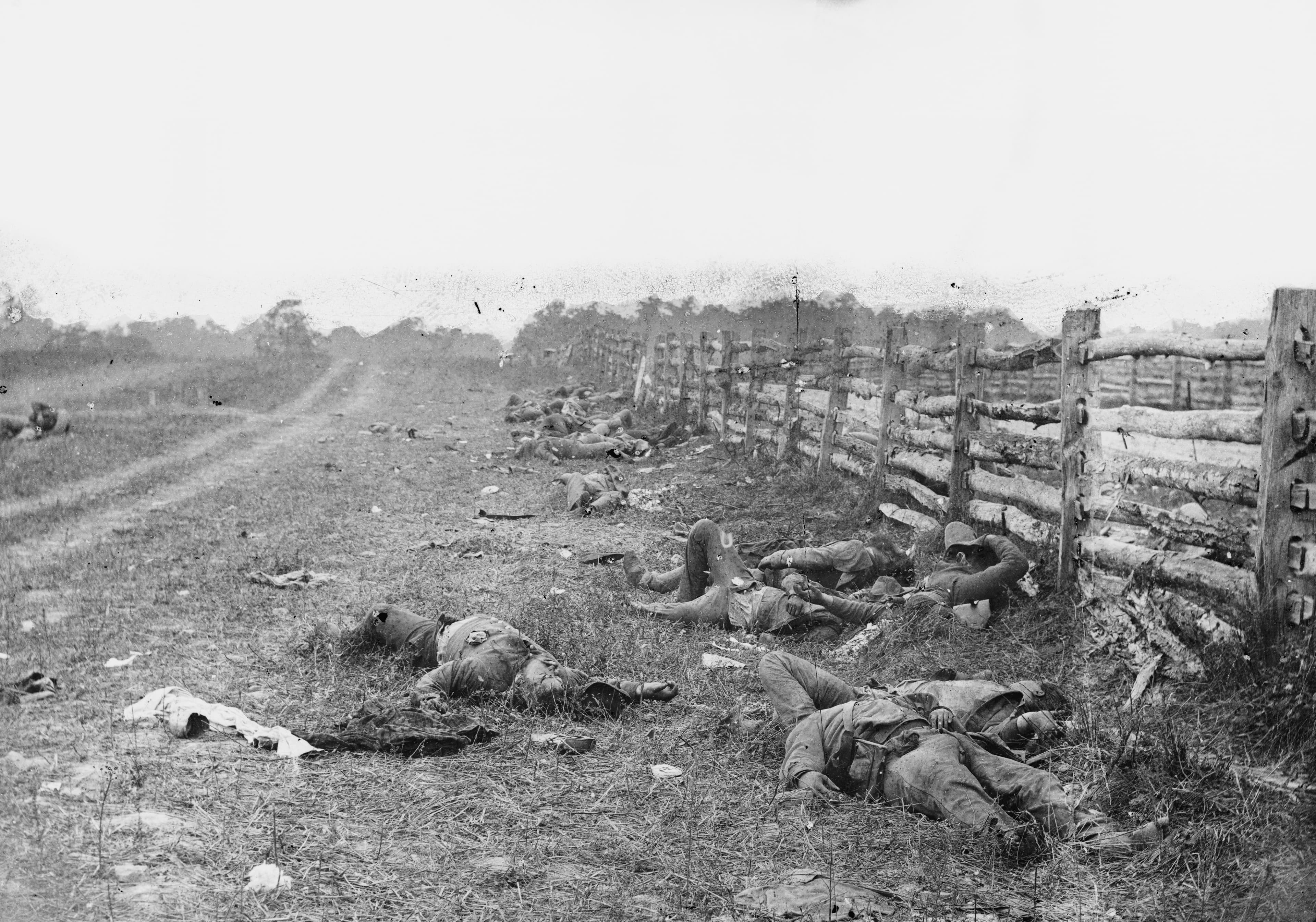
"The Dead of Antietam"
Those who walked inside went silent. The photographs showed soldiers lying on the battlefield — bodies beginning to decompose, limbs twisted, mud and blood across open fields.
For the first time, Americans saw what war actually looked like.
The Man Who Brought a Camera to War
Mathew Brady (1823–1896) was already the most famous photographer in America before the Civil War began.
He operated studios in Washington and New York, photographing presidents and celebrities. Abraham Lincoln sat before Brady's camera multiple times. Lincoln later said:
"Brady and the Cooper Union speech made me President."
In April 1861, the Civil War began. Brady made a decision: he would document this war with his camera.
Those around him warned him against it. The battlefield was dangerous. And the photographic equipment of the era required hauling a large horse-drawn wagon — a mobile darkroom — to every location. Glass plates had to be coated with chemicals, exposed, and developed on-site.
Brady invested his entire fortune — roughly $100,000, equivalent to millions of dollars today.
Antietam — The Day Photographs Changed History
September 17, 1862. Antietam Creek, Maryland.
The bloodiest single day in American military history. Approximately 22,000 soldiers were killed or wounded — Union and Confederate combined.
Brady's assistants Alexander Gardner and James Gibson were there. After the fighting stopped, they walked the battlefield with their cameras.
And they photographed what they found.
Bodies lay across the fields — against fences, in ditches, along roads. Gardner pressed the shutter. No staging. No composition. Just what was there.
One month later, Brady displayed the photographs in his New York gallery.
The New York Times wrote:
"Mr. Brady has done something to bring home to us the terrible reality and earnestness of war. If he has not brought bodies and laid them in our dooryards and along the streets, he has done something very like it."
Lincoln and Brady
Brady photographed Lincoln multiple times throughout the war.
Lincoln's face changed with each sitting. The man of 1860 and the man of 1865 seemed barely the same person — deepened lines, heavier eyes. Brady's photographs captured that transformation.
Lincoln trusted Brady. The photographs were used for campaign posters, newspapers, and eventually currency. The Lincoln portrait on the American five-dollar bill is based on a Brady photograph.
One Hundred Photographers, Seven Thousand Photographs
Brady did not work alone.
He hired approximately 100 photographers and sent them across the war's many fronts. Alexander Gardner, Timothy O'Sullivan, George Barnard — they fanned out across four years of war.
Together they produced roughly 7,000 photographs: combat sites, prison camps, field hospitals, destroyed cities, armies on the march.
For the first time in history, an entire war was documented from beginning to end.
Bankruptcy, and Legacy
When the war ended, Brady had almost nothing left.
He could not afford to store the 7,000 glass plate negatives. Creditors seized them. Brady was ruined.
In 1875, Congress purchased Brady's Civil War collection for $25,000. Brady used the money to pay his debts and spent his remaining years in poverty. In 1896, he died alone in a New York hospital.
But the photographs survived.
Brady's Civil War collection is now held at the Library of Congress, freely viewable online by anyone in the world.
The First Person to Show War as It Was
Before Mathew Brady, war was a story about heroes.
Painters showed generals on horseback. Newspapers printed dispatches of victory. Citizens imagined war as something noble and distant.
Brady's photographs destroyed that illusion.
The people who stood in his gallery in October 1862 learned what war actually was. That knowledge — that direct confrontation with death — shaped public opinion in ways that words alone never could.
The camera was not just a recording device.
It was an instrument that changed history.
Get new posts by email ✉️
We'll notify you when new posts are published